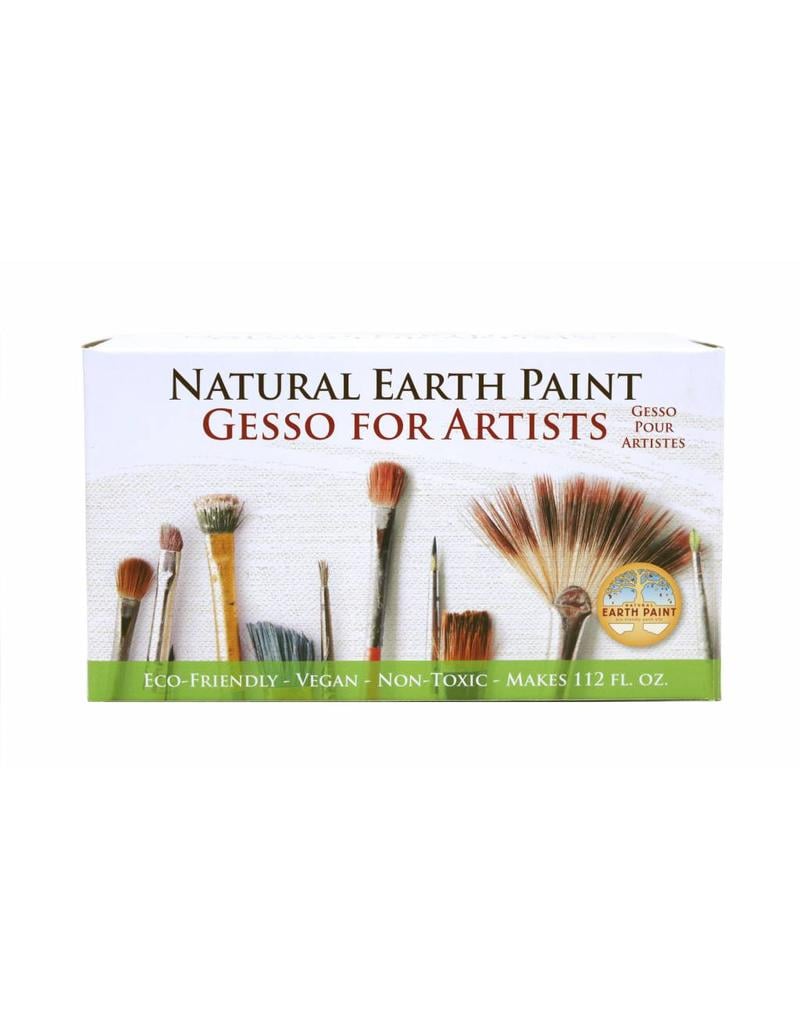
Natural Earth Paint eco-friendly and vegan gesso for artists
The natural non-toxic gesso is a professional, archival-quality kit that is perfect for earth and health-conscious artists.
This Kit Contains:
900 gr. of premium, artist-grade powdered limestone
Two packets of methyl cellulose glue: a natural, plant-based glue (ca 1,8 gram)
mixing instructions
The full kit makes 1,5 litre Gesso, which is enough to prime about 10-15 medium-sized canvasses. It depends on the size of the canvas if you can prime more or less.
Directions: Mix as much gesso as needed for each session. Once mixed, store in an airtight container at room temperature. Shelf-life is 2-3 months. Dust is not good for the lungs , so always use a mask while mixing.
The History of Artist Primers Historically, artists primed their painting surfaces with animal hide glues such as rabbit skin glue. Besides being hard on the rabbit population, these primers tend to be brittle and susceptible to cracking. With the invention of plastics in the early 1900s, petroleum-based, acrylic gesso became the most commonly used artist primer among artists. Acrylic gesso contains ammonia and formaldehyde as preservatives, which is why many professors at art schools recommend wearing a respirator when you prime your canvasses.
What is Methyl Cellulose? Methyl Cellulose is polymer derived from plant fibers and is a vegan alternative to animal glues. It is naturally archival. It is also widely used in foods and cosmetics, and it is non-allergenic.
Why is the gesso not pre-mixed and in liquid form? Once these ingredients are mixed, they have a limited shelf life in a container. Natural Earth Paint has not discovered a non-toxic preservative that worksyet, and they refuse to use common petroluem based preservatives to extend the shelf life. By mixing it yourself you are eliminating the need for any additional toxins or preservatives.
Ingredients: Made with French marble dust, limestone powder, titanium dioxide pigment and plant-based binders (Methyl Cellulose), this gesso is superb quality, 100% non-toxic and vegan
You can also use Gesso on wood.Wood absorbs less than canvas.Our Gesso therefore works even more efficiently on wood.
Frequently Asked Questions
Can't find the answer to your question below? Check out our FAQ-page, here you can also find frequently asked questions about specific colors.
After the first coat of methyl cellulose, why is my canvas wrinkly / wavey?
It's normal for the canvas to look loose at this step, this next step of applying the "Gesso Mix" will tighten up the canvas. If it's not as tight as you want after the second step has dried, spritz water on the back of the canvas and it will tighten further.
Can I skip the first coat of methyl cellulose? The first coat of methyl cellulose is really just designed to seep into the fibers of the raw canvas to give another layer of protection since if oil paint touched raw canvas it would eventually rot/mold. If you’re painting on wood or a pre-primed surface, then you don’t need the first coat of methyl cellulose.
How much coverage does the gesso kit have? The full kit is about enough for 10-15 medium sized canvases, so you can half or quarter the recipe for smaller applications.
After it dries, it is chalky, why? That's a sign that there's not enough Methyl Cellulose glue in the mix. That's the glue that keeps it all together. For the ones you've already gessoed, you can brush on one more layer of the clear methyl cellulose on top and let dry overnight. For any new canvases or panels, be sure to brush on a layer of the glue first, let dry, then when you mix up the gesso mix, add one or two more tablespoons of the Methyl cellulose glue to the mix then it calls for. This recipe is based on a Renaissance recipe when they preferred a more absorbent surface because the paint would bond to the top layer of gesso rather than sitting on top which is what we’re now used to with acrylic gessos.
Is it archival? The gesso has incredible longevity and is very archival and non-yellowing.
What is the shelf life? The mixed Methyl cellulose in a glass jar has a 1 year shelf life if uncontaminated and kept at room temperature. The mixed gesso has a 6 month - 1 year shelf life once mixed.
Is the gesso absorbent? Our gesso is a replica of gesso made during the renaissance. They preferred that the surface was slightly absorbent so the first layers of oil paint would seep into it a bit and fully bond instead of just sitting on top which is what we’re used to these days with Acrylic Gesso (plastic). If you’d like it less absorbent you can add another layer of methyl cellulose on top OR you can add more methyl cellulose into the gesso mix, for example 6 or 8 Tbsp.