

| Article number: | 108 |
| Availability: | In stock (13) |
| Delivery time: | NL and BE 1-3 working days - Rest of Europe 2-8 days |
ca. 8 fl. oz (500 ml)
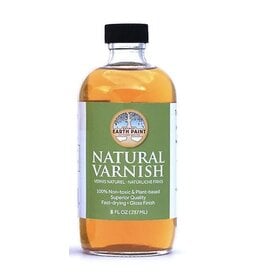
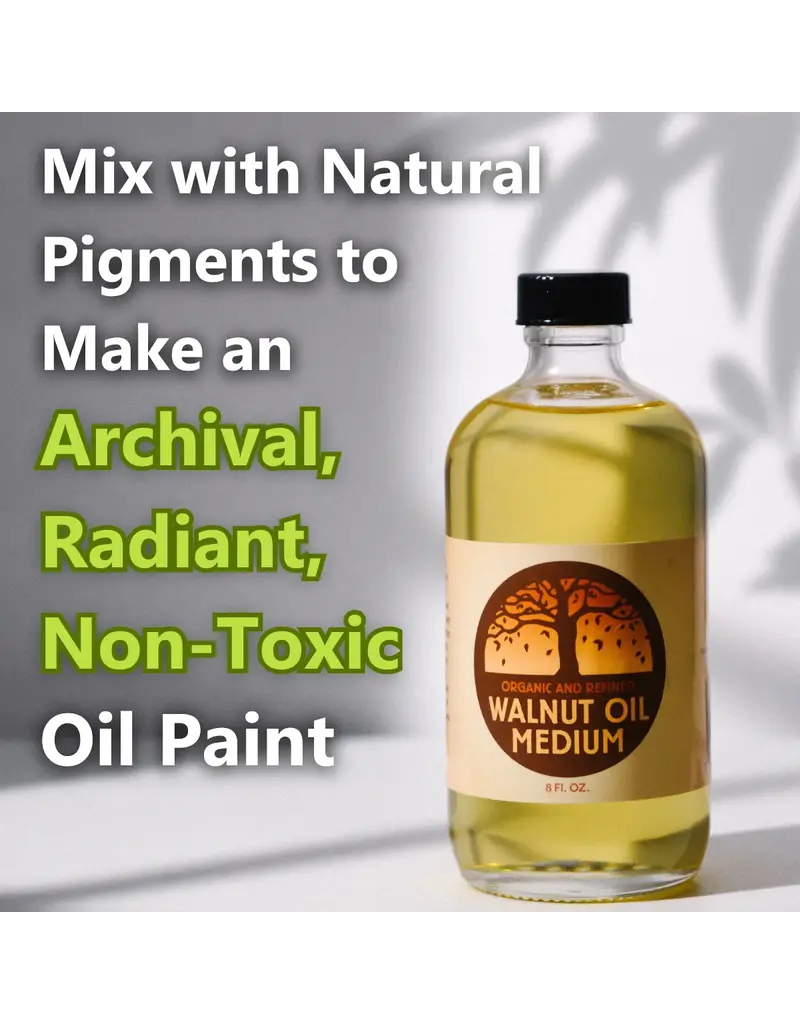
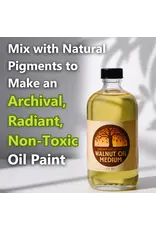
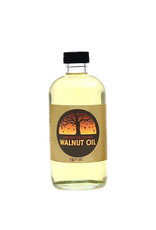
The organic refined walnut oil is slow-drying, non-toxic, and suitabale to blend with our mineral oil pigments to make natural oil paint.
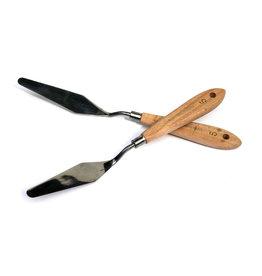
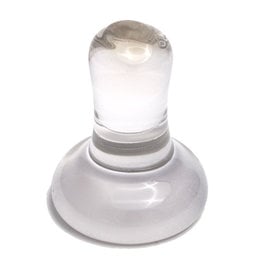
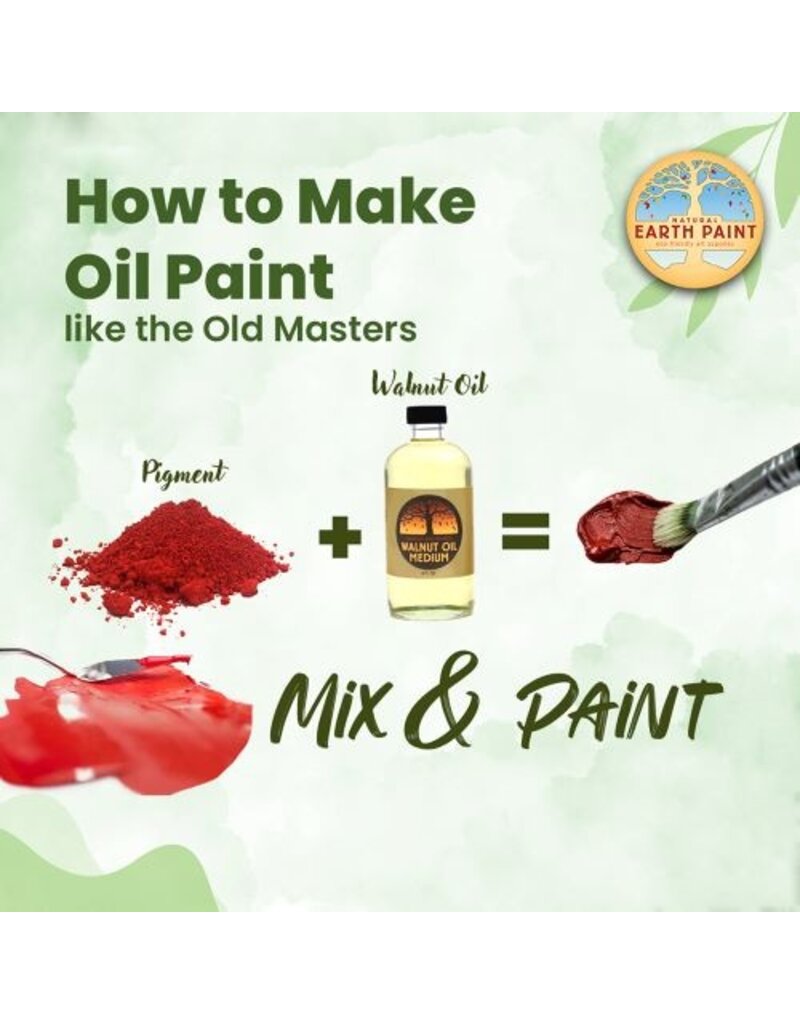
Walnut oil in contrast to linseed oil doesn't yellow over time. Directions: simply bring earth pigment on to a palette and pour a small amount of walnut oil on top. Mix with a palette knife or glass muller until you achieve a smooth, thick consistency. Walnut oil is also great for thinning and adding fluidity to paint, and for cleaning brushes.
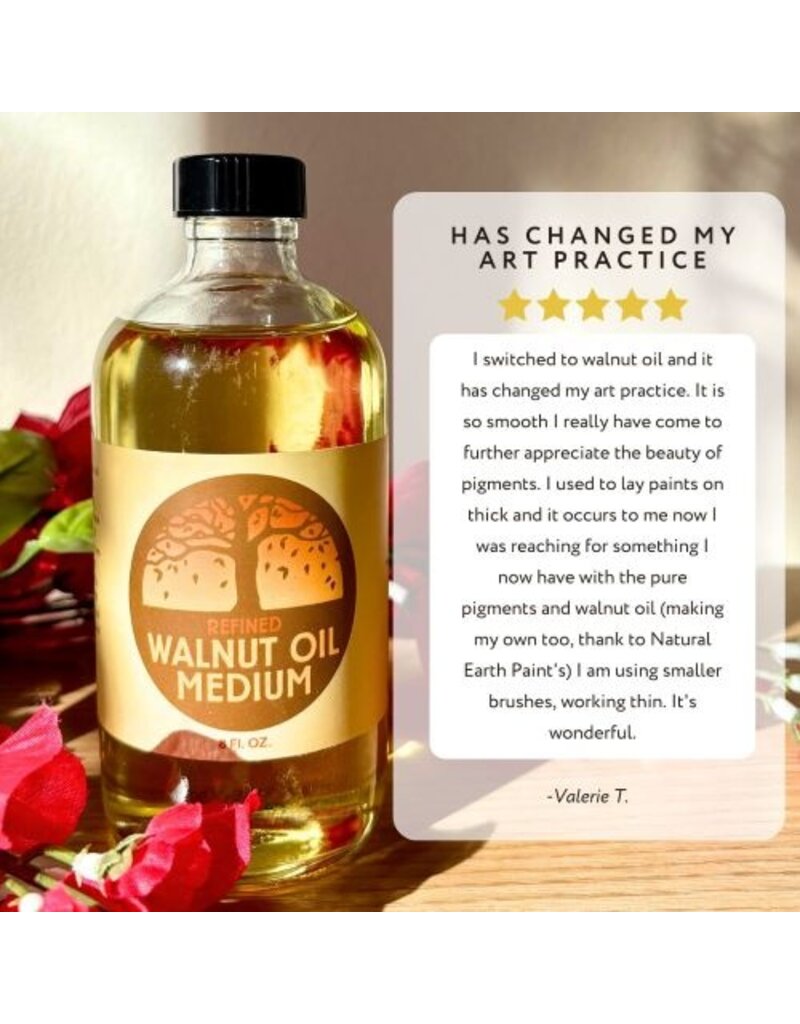
Basically walnut oil is the most perfect oil to mix your natural pigments. The oil does not yellow your artworks overtime and has a long shelf life. Old masters such as Rembrandt made their paints with walnut oil and throughout the years the colors remain beautiful and the paint lasts for years on all types of surfaces, such as Canvas. It also cleans your brushes and is a perfect substitute for solvents.
Can't find the answer to your question below? Check out our FAQ-page, here you can also find frequently asked questions about specific colors.
Does it yellow over time?
We sell walnut oil because it is less yellowing than linseed oil although there will be slight yellowing over time. When mixing your own oil paint, many people choose to use Hempseed Oil with the white pigments only (instead of walnut or linseed oil), so that the white paint will never yellow.
A common cause of yellowing is called "dark yellowing" and happens when pieces are stored in the dark for too long. The good news, though, is that placing the art piece back in direct sunlight will reverse the yellowing. This reversal takes anywhere from 1-7 days.
How long does it take to dry?
Walnut oil dries slowly and can dry to the touch between 4-14 days depending on the humidity of your area, the type of pigment used and how thickly it was applied.
Is it refined?
Yes. It is pure, expeller pressed walnut oil, so no other chemical or oils are introduced in manufacturing or bottling (when it is refined it is naturally "bleached" with clay which is just a natural filtering for color and clarity and there should be no allergen potential because it is refined). No hexane or solvents are used at all.
How does it compare to linseed oil?
You can use linseed oil interchangeably. We use walnut oil because it's higher quality and is less yellowing over time. But linseed oil dries faster which some people prefer.
How does it compare to poppyseed oil?
Historically, some painters mixed their white pigment with poppyseed oil instead of walnut or linseed because it never yellows and is the clearest of all oils.
How does it compare to sunflower oil?
Sunflower oil can be used but it dries much slower than walnut oil (which already dries pretty slow) and some sources say that it may discolor your painting or yellow over time.
Is it flammable?
All natural oils are potentially flammable if left on a rag in a hot area. It's suggested that you store oil soaked rags in a metal bucket with a lid and submerge in water if you're not disposing of them right away. Artists have many techniques of safely storing or disposing of their soiled rags - you'll find a lot of tips on google and artist forums.
Can it be used for a wood stain?
Most woodworkers who are staining outside wood furniture just mix our natural pigments with walnut oil and brush it on and then wipe with a dry rag. If you want the paint more opaque just add more pigment or don't wipe with the rag. It will bond well with the wood. It will completely compost and biodegrade because it's just earth and oil. Here's a tutorial with other natural wood staining recipes as well.
What about clean-up?
Large amounts of oil or oil paint should be disposed of according to your city’s local ordinances.
To wash oil paint from your hands and body:
To clean brushes:
*You can re-use Eco-solve nearly indefinitely just like regular solvent. After cleaning your brushes, let it sit in a covered glass jar for a few days to a week and then the paint sediment will settle to the bottom. You can carefully pour the "clean" eco-solve that is on top into another container, then the paint sludge left in the jar can be wiped out and disposed of in the trash or washed down the drain if the paint is non-toxic and safe for waterways.